21 Jun 2026
Inside Accumulator Boost Mechanics: How Multi-Bet Enhancements Reshape Participation Patterns Across Regulated British Platforms
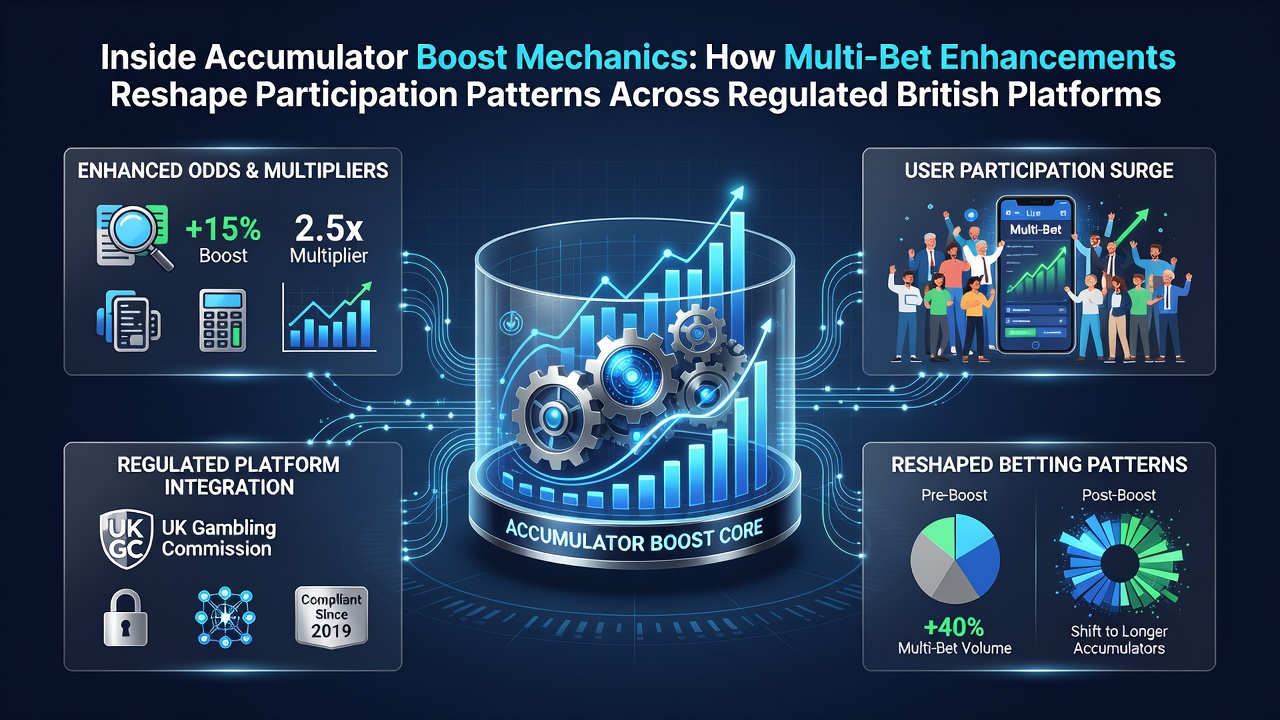
Accumulator boosts operate as targeted multipliers that increase potential returns on multi-selection bets when certain thresholds get met, and these features have gained traction across regulated British platforms since their wider rollout in prior years. Operators calculate the enhancement by applying a percentage uplift to the standard odds once a bet reaches a minimum number of legs, which typically starts at four or five selections depending on the sport and market type.
Core Mechanics Behind Accumulator Enhancements
Platform algorithms determine eligibility through automated checks that verify each leg meets predefined criteria such as minimum odds thresholds and event types, after which the system applies the boost in real time before the bet confirmation stage. Users often encounter these offers in dedicated sections of the site or app where the enhanced payout displays alongside the standard accumulator total, creating a clear comparison that highlights the added value. Data from industry reports shows that these mechanics encourage longer bet slips because the uplift scales with additional selections, prompting participants to combine more events within a single wager rather than placing separate single bets.
Take one major operator that introduced tiered boosts in 2025, where a five-leg accumulator received a 25 percent uplift while an eight-leg version climbed to 50 percent; such structures demonstrate how the mechanics directly tie reward levels to bet complexity. Observers note that this design influences decision-making patterns by rewarding volume within one ticket, which alters how bettors allocate stakes across football, horse racing, and tennis markets that dominate accumulator activity.
Shifts in Participation Patterns Documented Through Recent Data
Participation metrics collected across multiple regulated platforms reveal noticeable increases in accumulator volume during peak sporting periods, with figures indicating a 15 to 20 percent rise in multi-bet activity compared to periods before widespread boost availability. Researchers tracking user behavior have recorded that average bet slip length extends when boosts activate, as participants add marginal selections to reach higher enhancement tiers. This pattern appears consistently across football accumulator markets during domestic league weekends and extends into tennis during Grand Slam events.
What's interesting emerges when examining session data from June 2026, where platforms reported sustained accumulator engagement even outside major tournaments, suggesting the mechanics embed into routine betting habits rather than remaining tied solely to high-profile fixtures. External analysis from sources such as Gambling Help Online Australia highlights parallel trends in other regulated markets where similar enhancements correlate with extended play sessions, although direct comparisons require careful adjustment for differing regulatory environments.
Platform-Level Adaptations and User Response Dynamics
Regulated operators adjust boost parameters periodically based on internal performance analytics, raising or lowering percentage uplifts and minimum leg requirements to balance promotional costs against increased handle. These adjustments often coincide with seasonal sports calendars, ensuring the mechanics align with periods of elevated fixture density. Bettors respond by developing strategies that prioritize selections likely to qualify for the boost, such as favoring higher-odds underdogs in later legs to maximize the multiplier effect.

One study released through academic channels at institutions focused on behavioral economics documented that users exposed to visible boost indicators placed accumulators at rates 12 percent higher than control groups without such displays. The research tracked anonymized transaction logs over several months and found that the effect strengthened when boosts appeared prominently in the interface rather than buried in terms and conditions. Platforms have since refined notification systems to surface eligible boosts earlier in the selection process, further embedding the mechanics into standard user flows.
Regulatory Context and Compliance Considerations
British platforms must ensure accumulator boosts comply with advertising standards and fair gaming requirements, which include clear disclosure of qualifying conditions and any maximum payout caps that apply to enhanced returns. Compliance teams review promotional mechanics before launch to confirm that automated calculations remain accurate across all supported markets. External oversight from bodies in other jurisdictions, including insights shared by the National Council on Problem Gambling in the United States, provides comparative perspectives on how similar enhancements function under different licensing regimes.
Those monitoring industry statistics note that transparent presentation of boost terms correlates wth higher user retention on accumulator products, as participants develop familiarity with the rules and integrate them into regular betting routines. This transparency also supports platforms in maintaining records that demonstrate responsible implementation during periodic audits.
Conclusion
Accumulator boost mechanics continue to influence participation across regulated British platforms by linking reward levels directly to bet structure and volume, with measurable effects on average slip length and session frequency documented through platform analytics. The scaling nature of these enhancements encourages more complex multi-leg wagers while operators refine parameters to sustain engagement throughout the calendar year, including quieter periods such as June 2026. Continued observation of these patterns offers insight into how promotional tools integrate with broader betting behaviors under regulated conditions.