26 Jul 2026
How Matched Free Bet Sequences Shift Risk Profiles for Returning Punters at Licensed British Operators
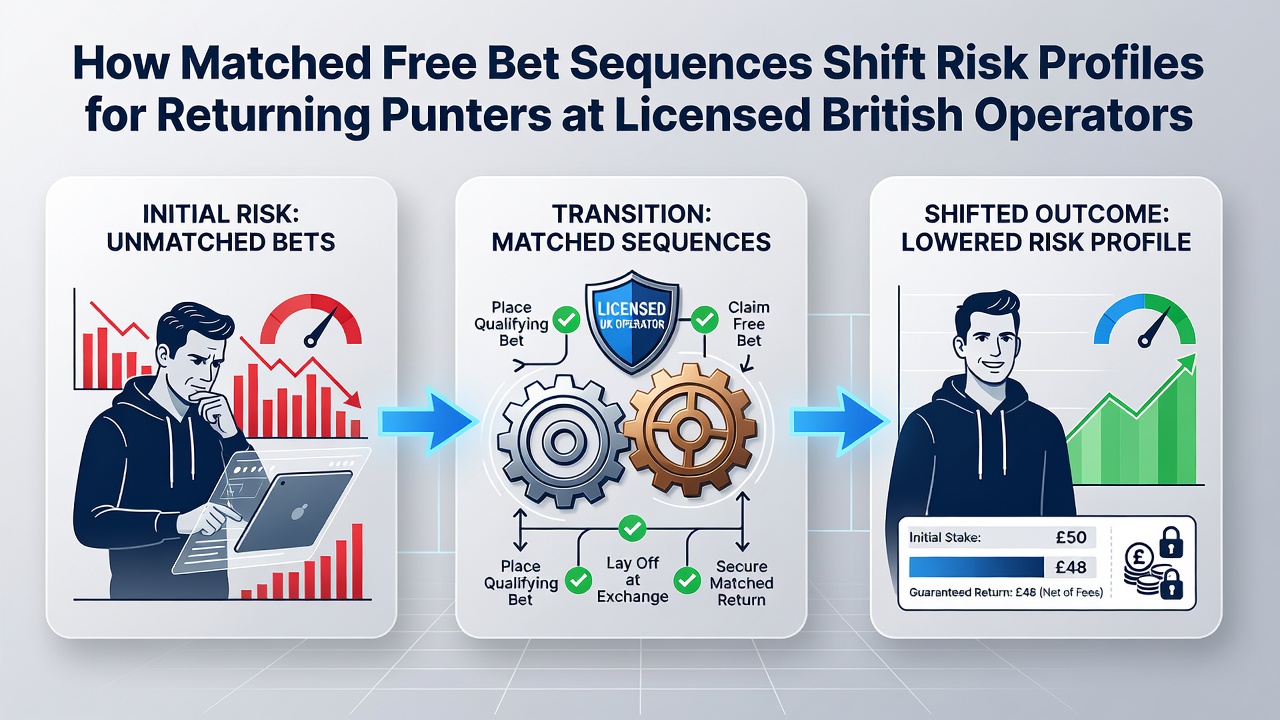
Matched free bet sequences function as structured promotional tools that licensed British operators deploy to retain existing customers after initial welcome offers expire, and these sequences typically require punters to stake their own funds first before receiving equivalent free bet credits that match the wager amount. Data from industry tracking services indicate that returning punters engage with these sequences at higher volumes during peak sporting calendars, with activity levels rising notably in July 2026 amid preparations for major upcoming fixtures. Observers note that the mechanism allows participants to extend their betting activity across multiple events while the free bet portion covers potential losses on the matched stake, thereby altering the overall exposure compared to standard cash wagers.
Mechanics of Matched Sequences in Practice
Operators structure these sequences so that a punter deposits funds, places a qualifying bet at odds of 2.0 or greater, and then receives a free bet token equal to the stake amount, which must be used within a set timeframe such as seven days. Research from academic institutions shows that sequences often chain together across several deposits, creating layered positions where the free bet credits offset portions of total outlay while the punter remains responsible for any excess losses. Those who have studied participation patterns find that returning punters frequently combine these credits with price boost promotions, resulting in composite bets that carry different payout structures than standalone wagers.
Figures reveal that average sequence length for repeat users spans four to six matched bets per month, according to aggregated operator reports compiled by European gaming associations. This chaining process shifts the risk profile because the free bet component effectively reduces the net capital at risk on subsequent legs, even though the initial qualifying stake comes from the punter's balance. Experts have observed that operators enforce minimum odds thresholds and rollover conditions that extend the sequence duration, compelling continued engagement before full withdrawal of any resulting funds becomes possible.
Risk Profile Adjustments for Repeat Participants
Returning punters experience a recalibrated risk exposure when sequences incorporate free bet elements, since the credits function as additional bankroll that does not require further deposits yet still demands specific wagering conditions. Studies from Canadian research centers indicate that this structure encourages higher total turnover because the free bet portion absorbs downside on matched stakes, allowing participants to allocate personal funds across more selections without proportional increases in out-of-pocket commitment. Data shows variance in loss rates decreases modestly for sequence users compared to non-promotional betting, although overall spend volumes rise as the sequence progresses through multiple cycles.
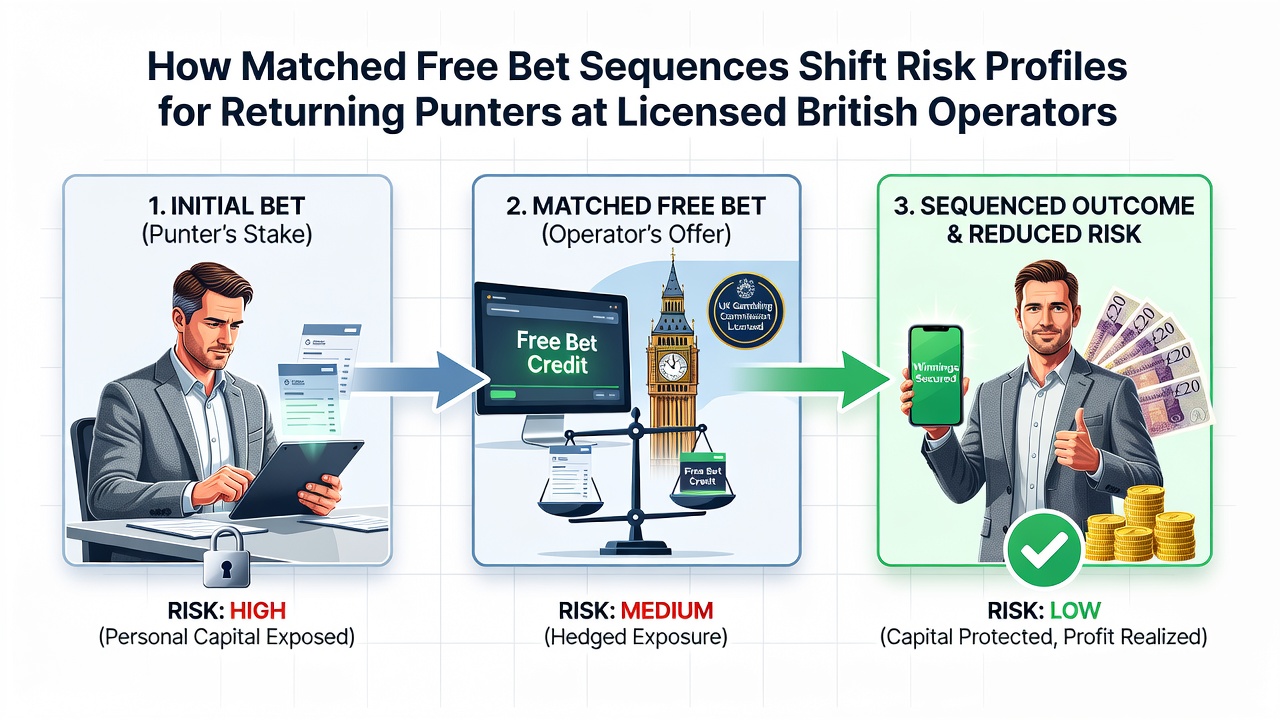
One case documented by university analysts involved a cohort of repeat bettors who extended their active periods by an average of 12 days per sequence cycle, during which net risk per event declined due to the buffering effect of free bet credits. Those who've examined transaction logs note that operators adjust maximum stake limits on free bet portions to control exposure, which in turn influences how punters distribute their own capital alongside the promotional elements. The result is a hybrid risk profile where early sequence stages carry standard cash bet characteristics while later stages benefit from partial subsidization through matched credits.
Operator Implementation and Regulatory Context
Licensed British operators integrate matched sequences into loyalty frameworks that activate automatically once a returning punter completes prior bonus terms, and these frameworks often align with broader responsible gambling tools such as deposit caps and session reminders. Reports compiled by Australian wagering authorities highlight similar patterns in other regulated markets, where sequence usage correlates with sustained account activity rather than abrupt cessation after welcome offers end. In July 2026 operators reported stable uptake of these promotions amid seasonal fixture schedules, with systems designed to flag unusual sequence patterns for compliance review.
Industry organizations track how the sequences interact with existing customer verification processes, ensuring that risk adjustments remain within licensed parameters that prohibit targeting of vulnerable segments. Research indicates that the net effect on individual risk profiles depends on the punter's ability to meet qualifying criteria consistently, since missed rollovers terminate the sequence and revert activity to standard cash betting terms. Observers note that transparent display of terms at the point of offer acceptance helps maintain clarity around how free bet credits modify overall exposure across chained wagers.
Conclusion
Matched free bet sequences provide licensed British operators with a mechanism to sustain engagement among returning punters while introducing measurable shifts in risk distribution through the allocation of matched credits. Evidence from multiple regulatory regions demonstrates that these sequences modify loss variance and turnover patterns without eliminating the fundamental requirement for punter-funded qualifying stakes. Continued monitoring by research bodies will determine how such structures evolve alongside broader industry standards for promotional mechanics in the coming periods.